Mon Chat
A gallery dedicated to my cat, Saphir, a constant source of joy and inspiration.
About Saphir
I took Saphir in after my grandmother had to move into a nursing home. When he first came to me at 10 years old, he was a real scaredy-cat who would only drink water straight from the tap. He's evolved so much since then and has become a wonderful, confident companion who speaks French and German. And yes, I'm aware of the irony: how can an AI Product Owner for chatbots not know his own 'chat' (the French word for cat)? 😉
- Name: Saphir
- Age: 15 years old
- Birthday: Confidential (identity might get stolen)
- Vaccinations: Fully vaccinated
- Personality: A master of cunning and mischief
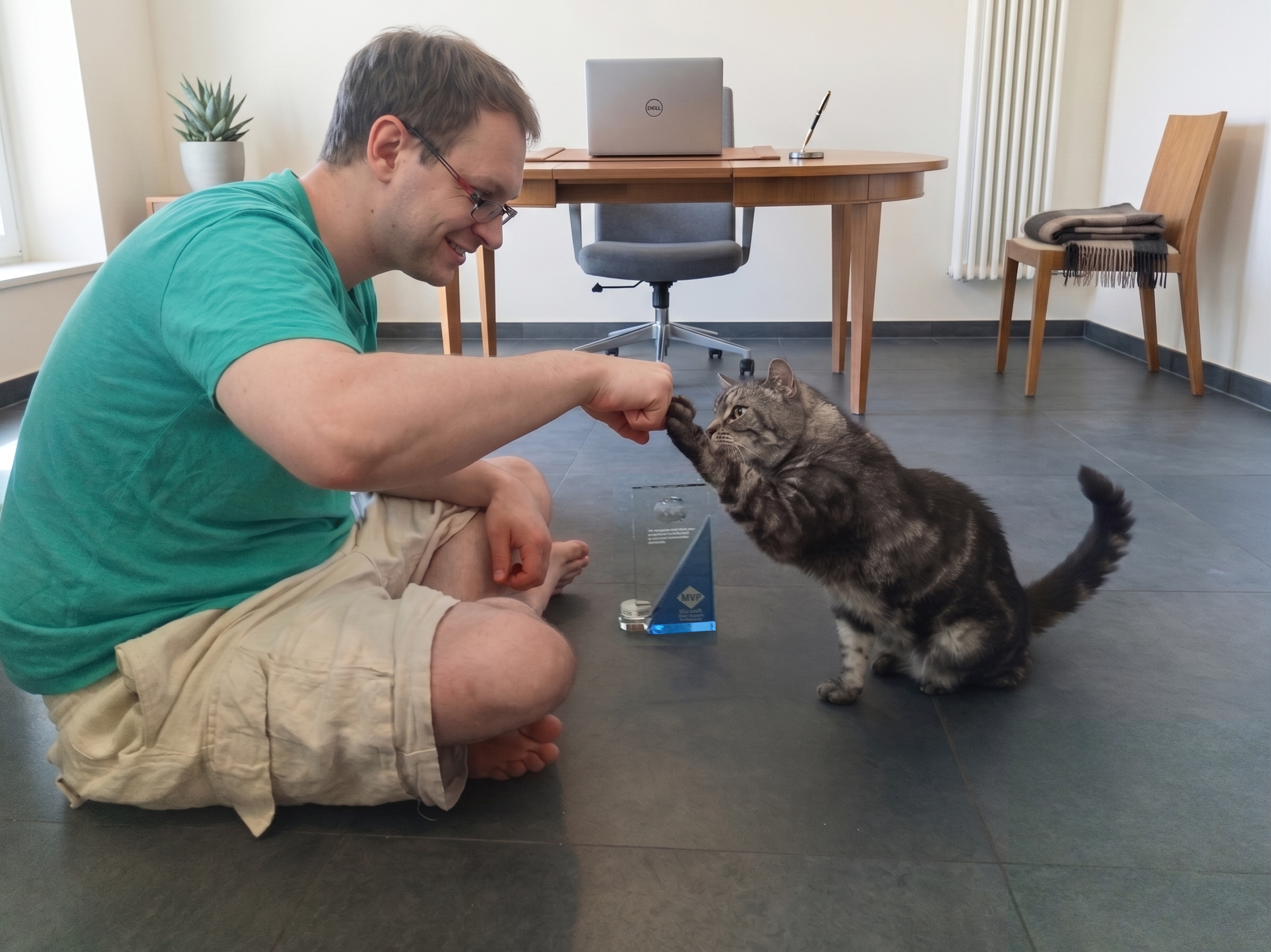
- Tricks: High five, fist bump, does a turn, sit, stand up.
A Note on Training: Cats vs. Small Language Models
Training Saphir to do tricks like 'fist bump' follows a surprisingly similar process to fine-tuning a Small Language Model (SLM). Here’s how:
1. Define Scope and Architecture
SLM
You define the model's specific job (e.g., code completion) and select a base model architecture (like Phi-3 or TinyLlama) that is suited for that type of task.
Cat
You define the specific trick (e.g., "fist bump") and assess your "architecture"—the cat's natural temperament and motivations (e.g., food-motivated, play-motivated, curious).
2. Data Curation and Preparation
SLM
You gather, clean, and format a high-quality, domain-specific dataset. This is the "perfect" information you want the model to learn from (e.g., thousands of examples of good code).
Cat
You "curate" your data, which is the highest-value reward your cat desires. This is your "clean dataset" of positive reinforcement (e.g., a specific salmon treat, not just any kibble).
3. Training or Fine-Tuning
SLM
You fine-tune the model. You feed it data and its loss function calculates errors (the difference between the model's guess and the correct answer). The model's parameters are updated to minimize this error.
Cat
This is the active training session. You "fine-tune" the cat's behavior. When you offer your fist and the cat grabs it (a "wrong answer"), your correction ("No" or withholding the treat) is the "error signal." When he bumps it (the "right answer"), the treat is the signal that reinforces that specific, correct action.
4. Optimization (Model Compression)
SLM
You make the model smaller and faster so it can run efficiently, using techniques like quantization (reducing precision) or pruning (removing unused parameters).
Cat
You "optimize" the trick. You "prune" unwanted behaviors (like ignoring the cat when it meows or paws for the treat). You also make the cue more efficient, "fading" from a big hand gesture to just a quiet verbal cue.
5. Evaluation and Iteration
SLM
You test the model on a "validation set"—new data it has never seen before—to ensure it truly learned the skill and didn't just memorize the training examples.
Cat
You test the trick in new environments. Can the cat "fist bump" in the living room (a new "validation set") instead of just the kitchen? Can he do it when a guest is over ("unseen data")? If not, you iterate and practice in those new contexts.
6. Deployment
SLM
The finished, optimized model is put into production. It's now "live" on a website as a chatbot or running on a phone to assist a user.
Cat
The trick is "deployed" into your daily routine. The "fist bump" is now a reliable skill you can request and show off, successfully integrated into your life with the cat.
AI Creations: Super Catyan
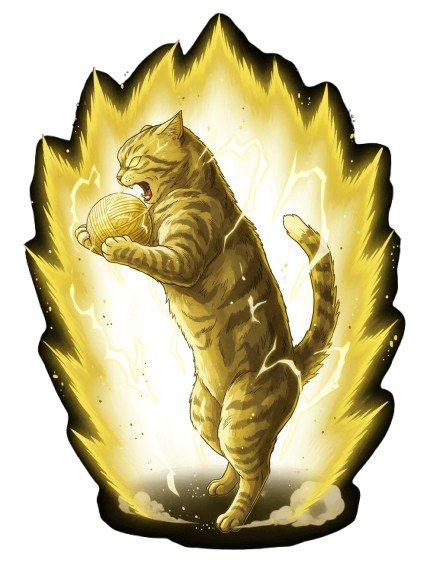
This transformation was made with Gemini (nano banana), turning a regular photo into a Super Saiyan version of Saphir.
 Original
 Generated with Gemini
Saphir, The Movie
Every photo on this page, animated into a 36-second montage. Built with Remotion, rendered frame by frame.
Saphir's Gallery
Here are some of my favorite moments with Saphir, from playful afternoons to quiet naps.